
In the animal kingdom, how bleak is the later life of top predators? Why are there only lions that starve to death, but no starving tigers?
- CosDream News

- Jun 1, 2024
- 3 min read
Updated: Jun 5, 2024
In the animal kingdom, the top predators that reign over their territories are the most formidable entities, much like kings in their own realms.

However, with time, even these mighty predators face decline.
Take lions and tigers, for instance, both revered as the "kings of the jungle" among the felines.
But as they age, lions are more likely to starve to death than tigers. Why is that?
First, let's examine the fate of lions.
Lions are the rulers of the savannah, symbolizing power and dignity.
However, their actual lives are starkly different from what movies portray, as they are almost constantly plagued by hunger and aimless wandering.

Living in a fiercely competitive environment, lions must confront significant challenges for survival and reproduction.
Scarcity of food on the savannah is one of the biggest issues they face.
As carnivores, lions require a large amount of prey to sustain themselves, but such prey is not readily available on the savannah.
They must roam far and wide, tracing the trails of food, putting all their efforts into each hunt.
Yet, lions often find themselves famished, having to endure hunger.
Competition on the savannah is intense, not only within lion prides but also against other predators like hyenas and leopards.

Scarcity of prey turns every hunt into a battle for food, and once food is acquired, it must be distributed within the lion pride to avoid internal conflicts.
In the limited environment, resource allocation is extremely restricted; large prides of lions must compete for limited food and territory, intensifying internal competition.
Moreover, within a lion pride, only one male lion becomes the "lion king," and the process of contention is brutal and competitive, with each struggle potentially a fight for life or death.
Those who fail to become the lion king wander the vast savannah alone, searching for food and territory, facing various dangers of the grassland.
In contrast, the survival strategy of tigers differs.

Tigers possess formidable hunting skills, crucial for their survival.
Whether in the wilderness or forests, tigers excel.
With sharp teeth and claws, coupled with agility, they effortlessly capture prey.
Additionally, the tiger's yellow-brown stripes provide natural camouflage, enabling them to stealthily approach prey in the forest and launch deadly attacks.
Tigers also possess excellent sensory abilities, both in hearing and smell, allowing them to easily track prey.
Unlike lions, tigers typically operate alone, scattered across vast forests.

Wild tiger populations are scarce, dispersed in different regions, making them less likely to be discovered even if they starve.
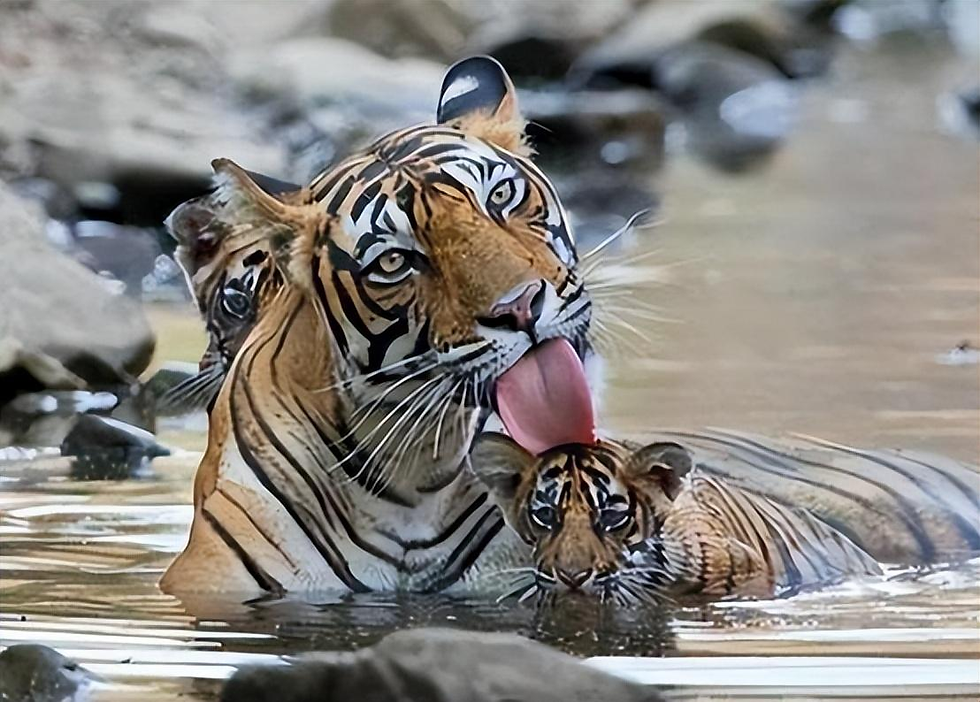
Furthermore, tigers adhere to a "do not kill" code of conduct, refraining from attacking defeated peers, harming pregnant tigresses, or hurting their own cubs.
This behavior demonstrates a natural respect and care for fellow members and family among tigers.
Although lions and tigers are both apex predators, their later lives differ significantly.

Lions live in the fiercely competitive savannah, facing not only the challenge of scarce food but also competing with other predators for resources.
Internal competition within lion prides is also fierce, with every lion king contention potentially a brutal struggle for survival.
Tigers, on the other hand, rely more on their hunting skills and acute sensory abilities, leading a relatively stable life in the forest.
However, with the continuous expansion of human activities, the survival conditions of both lions and tigers are threatened.
Human development activities have led to habitat loss and prey depletion, making their survival environments increasingly challenging.
Therefore, we must work together to protect these precious species, ensuring their continued existence in the wild.


Comments