
With the parade near, nine leaders absent, many use it for political statements, but China nails the key point in one sentence.

There are only seven days left until the "September 3rd Military Parade," and many people can already feel that the atmosphere this year is somewhat different.
Through the rehearsals, it is apparent that, in addition to the debut of new equipment, many weapons that were rarely seen before are now making their appearance in the public eye.

This military parade has particularly attracted the attention of many foreign dignitaries and national leaders from around the world.
China is meticulously preparing for the reception of these guests, ensuring everything proceeds smoothly.
This "September 3rd Military Parade" is not only an important domestic celebration for China, but also a focal event for the international community.
Because of this, some countries have taken this opportunity to voice their positions in an attempt to influence international public opinion.

Among them, Japan's stance is particularly eye-catching.
Japan publicly urged other European and Asian countries not to participate in China's military parade and conveyed through its embassies that China's focus on historical issues during the parade, as well as the strong anti-Japanese sentiments, made it advisable for countries to carefully consider their participation.
At its core, Japan’s refusal to allow other countries to take part in the parade stems from two reasons.
First, Japan has long been unwilling to face its historical issues, especially its responsibility for the Second Sino-Japanese War.

If other countries focus too much on this issue, it could potentially harm Japan's international image and its efforts to rebuild influence.
Second, Japan is concerned that the parade may negatively impact its strategic position.
Since Shinzo Abe took office, right-wing forces in Japan have been promoting "historical revisionism," attempting to alter international public opinion by obscuring historical facts.
For example, in 2015, Abe used vague terms like "ambiguity in the definition of colonial rule and aggression" to downplay the severity of Japan’s war of aggression.
However, China has used various means, such as this parade, to present solid historical evidence and reveal the atrocities committed by the Japanese army in China.
This move undoubtedly challenges Japan's attempts to alter history and rewrite textbooks, delivering a significant blow to the historical narrative it has constructed.
Russian media sharply pointed out: "Tokyo not only wants to forget the history of the Anti-Japanese War, but hopes the world will forget it too."
For many years, Japan has criticized China’s commemorations of the Anti-Japanese War as "anti-Japanese propaganda," but the international recognition of China's contributions during World War II continues to increase.
Apart from Japan, the reactions of other countries are also worth noting.
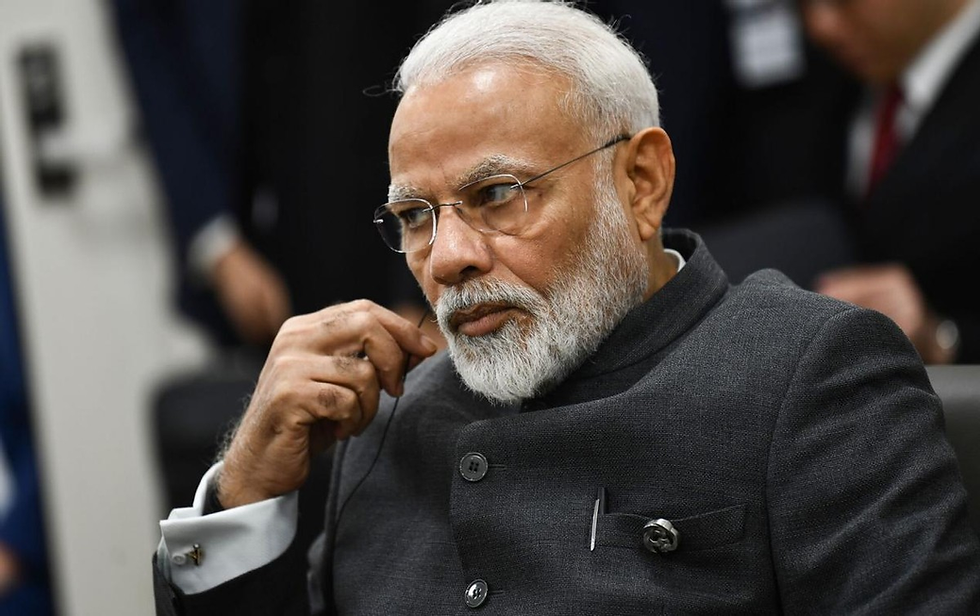
Indian Prime Minister Modi, despite his tense relationship with Trump, announced he would visit China but coincidentally missed China’s September 3 military parade.
In fact, Modi's decision reflects his internal deliberations.
In the context of strained US-India relations, Modi has frequently attempted to improve ties with China, but he has not entirely abandoned his intention to maintain good relations with Trump.
In September, Modi will attend the UN meeting in the United States and plans to meet with Trump to attempt to resolve the disputes between the two countries.
This suggests that Modi's current actions may be aimed at signaling to Trump that India has other options, and if Trump continues to apply pressure, India might turn to China.
However, Trump's policies on India also cannot be ignored.
On August 27 of this year, the US officially imposed a 50% tariff on India, demonstrating Trump's tough stance, focused solely on interests without considering other factors.
Despite this, Modi seems to still hold some hope for the United States.
In stark contrast to India’s position, the leaders of many Southeast Asian countries have actively expressed their intention to attend China's military parade.
China's cooperative projects with Southeast Asian countries, such as the China-Vietnam railway, Cambodia's Golden Port high-speed railway, and the China-Malaysia East Coast Railway, are progressing steadily.
These collaborations have not only driven local economic development but also made these countries deeply realize the importance and practical benefits of cooperating with China.
Meanwhile, Russian President Putin has confirmed that he will attend China’s September 3 parade, which indirectly highlights which countries maintain close cooperative relations with China.
Russia’s relationship with China has been deepening, and Putin’s attendance further underscores the friendly cooperation between the two nations.
For the countries that will not participate, China’s Foreign Ministry responded succinctly and powerfully: "We will release relevant information at the appropriate time."
This response, though seemingly calm, reveals a sense of poise and confidence, showing China’s composed handling of international affairs.
Through this military parade, the international community can clearly see the strategic orientations of various countries.
Some countries attempt to restrict China's development but cannot ignore China's vast market, so they choose to avoid participation or remain silent.
Meanwhile, the Indian government’s wavering stance exposes its opportunism and lack of firm positions in international negotiations.
In contrast, China has shown the composure and confidence expected of a major power, always adhering to an open and inclusive diplomatic philosophy, welcoming countries willing to cooperate and showing rational respect for those taking a wait-and-see approach.
This confidence and composure are not only a posture of China on the international stage but also a vivid reflection of its comprehensive national strength and strategic resolve.
It is important to note that events like the September 3 military parade are just a milestone in the profound changes in the global political landscape, and future international negotiations will continue to unfold.


Comments