
The laziness and inefficiency of Thais are not due to a character flaw but because of despair.

The general perception of Thai commoners from outsiders is that they are lazy and inefficient, which is seen as a flaw in the Thai national character.
However, this so-called national character is not innate; the laziness of ordinary Thais stems from despair.

Thailand has long had severe wealth disparity and class rigidity, making it difficult for ordinary people to break free from their circumstances no matter how hard they try.
For many years, the common Thai populace has only managed to maintain basic survival, with little improvement in their living standards.
The Thai people have tried to change their situation through struggle.
In the 1960s and 1970s, the Communist Party of Thailand launched a significant armed uprising, attempting to surround the cities with the countryside and seize power through armed struggle. However, the revolution ultimately failed.
The 20th century was a century of revolutions, with the Cold War between the United States and the Soviet Union providing ample conditions for revolutions worldwide.
But Thailand missed this opportunity, making it difficult for the country to change its political system for a long time.
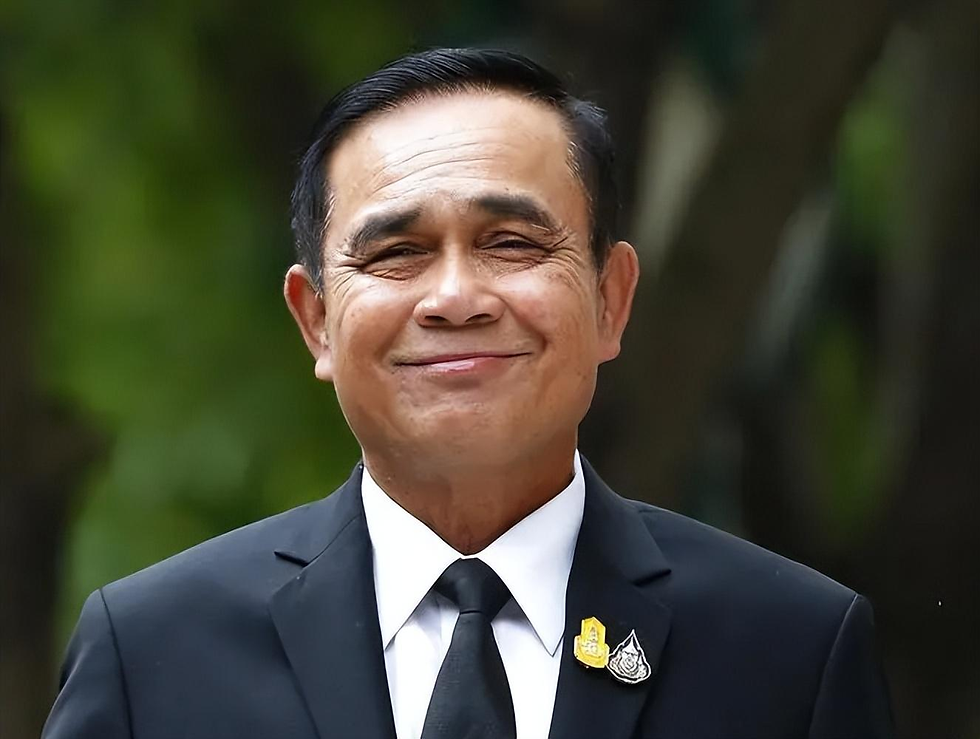
In this context, the only ones who cared about and tried to help the common people were the Thaksin family.
During Thaksin's tenure, he established free healthcare, poor people's loan systems, improved the living conditions of the poor, and fought grassroots corruption and mafia forces.
In a society dominated by the elite, the Thaksin family was the only force working for the benefit of the poor, which earned them immense popularity among the Thai public.
However, the Thaksin family's stance harmed the interests of the royalty and the military elite, leading to intense conflict. The Thaksin family did not win, and the struggle remains unresolved.
Therefore, from the perspective of ordinary Thai citizens, long-term despair has led them to choose laziness, similar to what the Chinese call "lying flat."
In a society where hard work yields no rewards, laziness is the smartest choice.

Thailand's social structure and economic situation severely constrain ordinary people.
The country's industrial structure is primarily concentrated in agriculture, tourism, and low-end manufacturing, industries that do not require high labor skills and offer low wages.
Although Thailand has a relatively complete basic education system, the penetration rate of higher education is not high, and the distribution of educational resources is extremely uneven, with high-quality resources concentrated in the capital and major cities.
This situation means that even if young people from rural and remote areas manage to receive higher education through hard work, they still struggle to find suitable jobs in their regions.
Meanwhile, high-paying jobs in the cities are often occupied by social elites.
In this environment, social mobility is extremely low.
No matter how hard ordinary people try, it is difficult to improve their economic status and social position by enhancing their personal abilities.
This phenomenon not only brings despair but also gradually forms a rigid social class.
The wealthy and elite upper class maintains the status quo to protect their interests, while the lower class falls into a seemingly unbreakable cycle of poverty.
Moreover, despite being a rapidly growing developing country, Thailand's wealth gap continues to widen.
The economic disparity between urban and rural areas and between different social groups is significant, further tearing apart society and solidifying class divisions.
In cities, a small group of wealthy individuals enjoys an international lifestyle and high-quality services, while most rural areas still face backward infrastructure and harsh living conditions.
The dual constraints of education and income, combined with scarce job opportunities, create a complex social dilemma, making ordinary Thais feel that the future is bleak.
In such a social structure, many people begin to doubt the value of hard work, choosing to adapt to the status quo or even give up on striving.
This mindset, to some extent, explains the "laziness" phenomenon observed by outsiders.
This is not an innate national character but a helpless choice under long-term social and economic conditions.
Thailand's political landscape has long been overshadowed by corruption, exacerbating social injustice and directly affecting the lives and development of ordinary people.
The Thai monarchy and military have historically played key roles, closely linked with political elites, forming a complex power network deeply rooted in all levels of Thai society.
Political corruption in Thailand is characterized by the elite class using various means to maintain and enhance their status and interests, often ignoring the needs and rights of ordinary people.
This phenomenon is particularly evident in the business sector.
Large enterprises and wealthy businessmen can often secure government contracts or concessions through personal relationships with government officials, while small merchants and ordinary businesses struggle to survive due to a lack of protection and support.
In such an environment, small merchants face numerous difficulties.
They often need to pay informal fees or bribe influential individuals to ensure their business is not subjected to unfair competition and official harassment.
This unfair business environment severely inhibits normal market operations and healthy economic development, making the entrepreneurial path for ordinary people full of obstacles.
Moreover, political corruption affects the distribution of social resources.
Education, healthcare, and public services often suffer from unequal resource allocation.
Residents in rural and remote areas particularly struggle to access high-quality public services, deepening the economic and social gap between urban and rural areas and different social groups.
The influence of the monarchy and military extends to political reform. In Thailand's history, any attempts to weaken these traditional power structures have often faced fierce resistance or direct intervention.
While the stability of the political situation may seem to ensure the country's continuity and order, it is achieved at the cost of the interests of the general populace and social justice.
As a result, ordinary Thais feel powerless and desperate in an environment filled with corruption and power plays. This sentiment drives many to abandon the fight, choosing to adapt or remain passive.
This social atmosphere undoubtedly plays a significant role in Thailand's "laziness" phenomenon. Thailand's history is full of social movements attempting to change the status quo, with the most iconic being the armed uprising by the Communist Party of Thailand in the 1960s and 1970s.
This movement adopted a strategy of "encircling the cities from the countryside," aiming to influence and eventually capture the cities by controlling rural areas, thus changing the country's political landscape.
Despite gaining considerable influence in rural areas at one point, the movement ultimately failed due to various factors.
Firstly, the international political situation during the Cold War profoundly impacted Thailand's internal turmoil.
The global confrontation between the United States and the Soviet Union turned Thailand into a pawn on the geopolitical chessboard.
To curb the spread of communism, the United States provided significant military and economic aid to the Thai government, strengthening its ability to fight the communists.
Although these social movements failed to achieve their ultimate goals, they had a profound impact on Thailand's social and political structure.
The failure of the movements not only deeply frustrated participants and supporters but also increased the general populace's skepticism about the possibility of political change.
Long-term social turmoil and the failure of political struggles have led many Thais to lose faith in radical methods of changing the status quo, deepening the sense of social fatigue and powerlessness.
In modern Thai political history, the Thaksin family undoubtedly stands out as a special case.
They not only rewrote many traditional political rules in Thailand but also tried to improve the living conditions of ordinary people to some extent.
Thaksin Shinawatra, the representative figure of this family, implemented a series of policies aimed at improving the lives of the poor after coming to power in 2001.
Thaksin's government introduced free healthcare and poor people's loan policies, which were especially welcomed in rural areas, significantly improving the living standards of grassroots people.
Furthermore, Thaksin tried to stimulate domestic consumption and investment through policy measures, increasing farmers' incomes, reducing the economic gap between urban and rural areas, and enhancing the economy's endogenous growth momentum.
However, while the Thaksin family's political line and reform measures gained broad support from the lower class, they also touched the sensitive nerves of Thailand's traditional power structures.
Their rise challenged the long-standing authority of the monarchy and the military, triggering a series of political conflicts and turmoil.
The monarchy and military viewed Thaksin's policies not merely as economic reforms but as a threat to the existing power structure.
This power struggle reached its peak in 2006 when Thaksin was overthrown by a military coup.
Despite Thaksin's brief return to politics later, his confrontation with the monarchy and the military has made Thailand's political situation unstable for a long time.
In recent years, the turmoil in Thai politics has not subsided.
Although the Thaksin family's political influence remains, they face significant challenges.
Ordinary Thais, faced with long-term poverty and a helpless social reality, choose to adapt and give up, which is the deep-seated reason behind the observed "laziness."
This phenomenon not only reflects Thailand's socio-economic difficulties but also reveals the complexity and variability of Thailand's political and power structures. In such an environment, the living conditions and mindsets of ordinary people are undoubtedly a crucial window for understanding Thai society.





Comments