
North Korea also has exports, but only 2 billion. What are the main products?

Updated: Jun 5, 2024
North Korea is a land of mystery and little is known about its people.

It is reported that North Koreans live without paying rent, its internal economic model is similar to the taste of China in the 1960s, there are still rural communes, but last year, North Korea began to trial some of the household contract system.
In terms of industry, North Korea's foundation is weak and has been stagnant since the 1980s.
After the collapse of the Soviet Union, North Korea's heavy industry could not be replaced, and light industry was almost at a standstill.

At present, North Korea's economy is heavily dependent on China, and the yuan is its main foreign exchange reserve.
North Korea exported about 2 billion yuan worth of goods last year, according to data.
Many wonder, how exactly do they know how much North Korea exports?
In fact, it is very simple, 96.7% of the 2 billion yuan of goods are sold to China, and the rest is sold to Vietnam and Russia, but all need to pass through China.

So what does North Korea export to China?
The first is food.
It may surprise some that North Korea exports food?
Yet North Korea still exports food even as its people struggle to meet their daily needs.
And the food here is not only rice, wheat, but also ginseng, various river fresh, seafood, and all kinds of mountain goods, such as dried mushrooms and pine nuts, which are much loved in the northeast.

These commodities are higher in price, many even have no cost input, only need to spend some effort to obtain, with three words to sum up is local specialties. Korean ginseng, in particular, has enjoyed a reputation since ancient times, and Koryopsis remains popular in China.
In terms of seafood, North Korea's sea shells and emperor shrimp are deeply loved by the Chinese. These seafood grow slowly in the environment of low temperature sea water at high latitudes, so the meat is firm and delicious.
By exporting these goods, North Korea accumulates foreign currency in yuan, which it then uses to buy needed goods such as food, oil and electricity.

Then there are the minerals, which China is interested in.
North Korea is a small country, but there are many kinds of minerals, rich reserves, and high grade.
According to the World Bank, North Korea has about 2% of the world's mineral reserves.
At present, iron ore is one of the largest minerals mined, with total reserves of about tens of billions of tons.
North Korea has about 300 billion tons of coal reserves, 70 percent of which is lignite.
North Korea also has large deposits of magnesium, gold, copper, molybdenum and uranium.

However, North Korea faces two major problems: a severe lack of oil resources, many vehicles can only use charcoal as fuel; Secondly, the technical level is backward, especially in deep mining performance is not good.
As a result, many North Korean minerals end up being mined under the guidance of Chinese technical experts and then sold to China.
In 2005, Tongsteel paid $7 billion for 50 years to develop North Korea's Musan iron mine, the largest iron mine in East Asia.
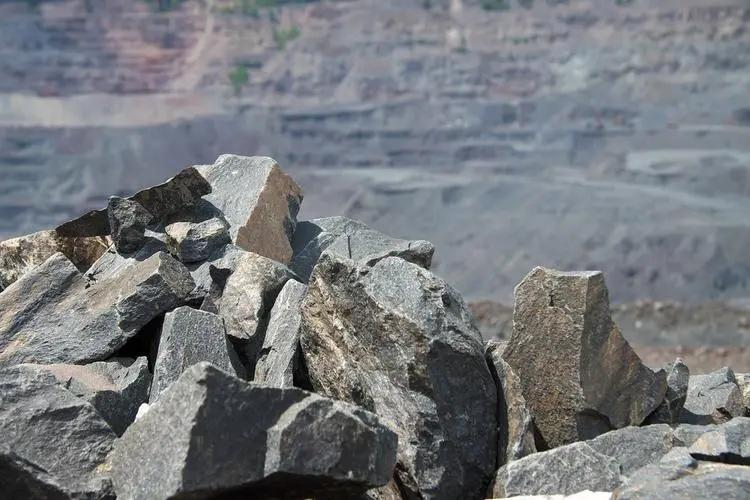
This is despite the fact that North Korean mineral exports to China have declined in recent years after North Korea tested a missile in 2016, which led to United Nations pressure on China and restricted trade between the two countries.
In recent years, North Korea has found another business opportunity in China, namely the wig market.
Since North Korean women's hair is usually thick and long, it can be cut and used to make wigs, which generates considerable revenue for North Korea.

Today, there are even people in rural North Korea who specialize in collecting hair, and China has become the main destination for North Korean wig exports.
According to statistics, the proportion of North Korean wigs consumed in China is as high as 57%, with a total value of $200 million.





Comments