
Exactly 75 years, Shanghai finally out the first private world's top 500 enterprises.

Updated: Jun 5, 2024
Shanghai finally ushered in the historic moment of a private company breaking into the world's top 500, which was a difficult breakthrough for Shanghai, and the arrival of this day, after a long wait of 75 years.

Just past March, Pinduoduo released its 2023 financial report, data show that Pinduoduo annual revenue reached 247.6 billion yuan, an increase of 90%, net profit of 60.6265 billion yuan, an increase of 90%.
According to the threshold of $30.9 billion for the world's top 500 enterprises in 2023, $247.6 billion is equivalent to $35 billion, which means that it has successfully broken into the ranks of the world's top 500 enterprises.
This marks the birth of the first truly private Fortune 500 company in Shanghai.

According to the statistics of the city where the headquarters are located, Shanghai has 12 of the world's top 500 enterprises, but Baowu, SAIC, Bank of Communications, COSCO and so on are mostly state-owned enterprises, central enterprises, while Delong Iron and Steel is a Hebei enterprise, Su Shang Construction is a Jiangsu enterprise, although they nominally belong to Shanghai, but are not real Shanghai local enterprises.
Therefore, Pinduoduo has become the first private Fortune 500 enterprise in Shanghai.
At the same time, observing the situation of private World Top 500 enterprises in other big cities, Shenzhen ranks first, with 11, of which 8 are private enterprises;

Beijing is next, with seven private Fortune 500 companies;
Hangzhou ranks third, with 4 private Fortune 500 companies;
Suzhou ranks fourth with three private Fortune 500 companies.
So why is it so hard for Shanghai to create a large private company?
Although Shanghai ranks first in the country in terms of economic strength and has the best talents and resources, it has been unable to cultivate local private leading enterprises, and can only rely on state-owned enterprises and central enterprises to support the market.
Shanghai is one of the largest economic and financial centers in China, attracting half of the country's foreign banks and venture capital, with first-class resources.
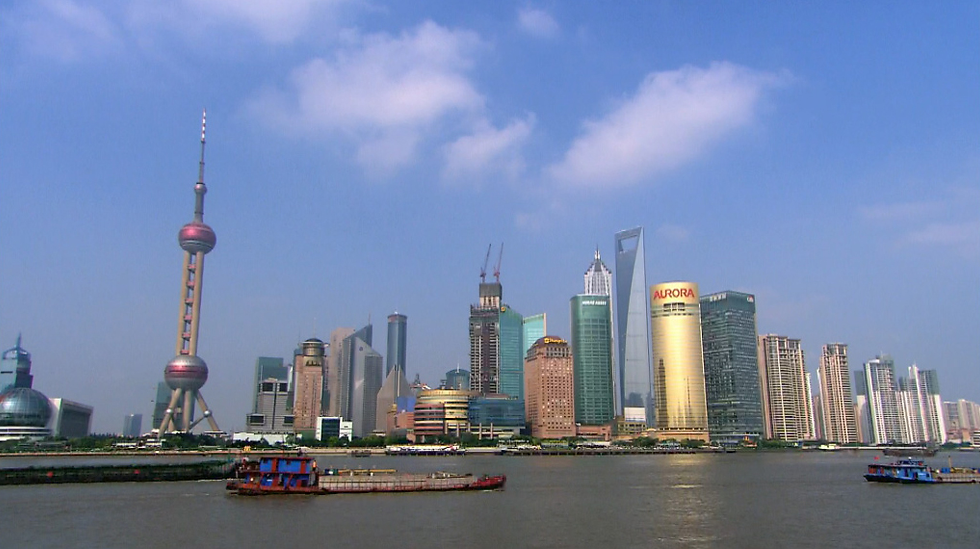
However, despite this, there are still huge defects in Shanghai's economy, among which the weak strength of private enterprises is a permanent pain point.
In contrast, Shenzhen has a large number of local high-tech leading enterprises such as Huawei, Tencent, BYD, DJI, Hangzhou has Ali, Ant Financial, Geely and other leading enterprises, and even Beijing has Jingdong, Byte, Baidu, Meituan and other Internet leaders.
Only in Shanghai, there are almost no competitive local high-tech companies, let alone private leading enterprises.
As an international metropolis with high-end resources, talents and funds, why is Shanghai so inadequate in this regard?

The reason, ironically, is that Shanghai has so many resources. Yes, Shanghai is not only the largest economic center in China, but also one of the seven financial centers in the world, enjoying huge international influence.
For multinational companies and large domestic enterprises, Shanghai has a natural attraction, with the aura of an international financial center, so a large number of multinational enterprises choose to set up regional headquarters in Shanghai.
According to statistics, up to now, Shanghai has 848 regional headquarters of multinational companies and 512 foreign-funded research and development centers, showing that Shanghai is still one of the most attractive places for foreign investment in the world.

However, the ease with which Shanghai can attract ready-made corporate headquarters means that the city does not need to nurture its own high-tech companies, making this laborious effort less important.
As a result, while Shanghai has top-notch resources and talent, for entrepreneurial companies, the resources, while visible, are not easily accessible. For a long time, there has been little room for startups to survive and develop in Shanghai, so the emergence of local high-tech companies has become almost an impossible task.
On the contrary, cities such as Shenzhen and Hangzhou do not have the advantage of attracting the attention of multinational companies because they lack the golden brand of Shanghai as an economic and financial center.

As a result, these cities have had to develop their own economies and pay more attention to nurturing and supporting the entrepreneurial development of local enterprises.
For technology startups, Shenzhen, Hangzhou and other cities have given strong support on land and resources, and have also given great preferential policies in tax relief and other aspects to encourage innovation and entrepreneurship.
In general, although Shanghai is rich in resources and talents, it is too dependent on state-owned enterprises and foreign investment, and lacks the support of local high-tech enterprises, which makes Shanghai's economic development seem obvious
It's not balanced. To change this situation, the only way out is to increase the support and cultivation of local scientific and technological innovation enterprises and realize the diversification of economic development.




Comments