
Chinese motorcycles in Southeast Asia crazy price war, but ultimately failed.
- CosDream News

- Apr 28, 2024
- 5 min read
Updated: Jun 5, 2024
Today, in Southeast Asia's motorcycle market, Chinese brands have been hard to find.

Twenty years ago, Chinese motorcycles had a rapid attitude in the Southeast Asian market, a time of thunder.
At their peak, Chinese motorcycles accounted for a full 80 percent of the market in Southeast Asia. However, in less than 20 years, without being attacked by foreign enemies, Chinese motorcycles are losing ground due to internal contradictions, and their market share is less than 5%.
Looking back on this history, we may be able to learn some lessons from the Southeast Asian motorcycle market, and perhaps the same applies to other areas of Chinese manufacturing.

The way Chinese motorcycles enter is a classic example of the "price butcher."
In Southeast Asia, where Japanese motorcycles used to dominate the market, their brand logos are almost ubiquitous. Especially in Vietnam during the peak period, almost all motorcycles are Japanese brands, because Vietnam has no motorcycle production capacity of its own, while Chinese products have not yet entered and Western brands are too expensive.
At that time, before 1997, Chinese motorcycles had not yet gone to the international market, and even the domestic market was not fully developed.

As China's domestic market share increased, Chinese motorcycles began to try to enter the overseas market.
Jialing Motorcycle from southwest China was the first to enter the Vietnamese market.
At first, everything went well, and the expansion rate of Jialing Motorcycle in the Vietnamese market was impressive, because its price broke the stereotype of the price of motorcycles.
The price of the motorcycle is only about $800, which is a surprise to consumers who never thought that the price of a motorcycle can be reduced to less than $1,500.

New car buyers are trying to buy motorcycles from China. These motorcycles sound and look no different from Japanese brands.
Therefore, at the beginning of the 21st century, Chinese motorcycles entered the market in Vietnam and other Southeast Asian countries in an accelerated manner.
Jialing Motorcycle was the first to act, and other motorcycle companies have followed suit, trying to enter the Vietnamese market.

In addition to Vietnam, Chinese motorcycles soon entered neighboring Cambodia. Lifan motorcycles are even used by Phnom Penh police on patrol.
From the initial entry of a motorcycle into the market to the growth of the market share to more than 80%, the rapid expansion of Chinese motorcycles is remarkable. Japanese motorcycles are no longer popular, and Chinese motorcycles seem to have dominated the entire Southeast Asian market.
However, after defeating the Japanese brand as an external enemy, Chinese motorcycles did not consider how to enter the next stage of operation, but fell into the mire of internal competition.

Chinese motorcycles did the same when they seized the Southeast Asian market. In the face of external competition, price wars can indeed crowd out rivals to a large extent.
However, if it still relies on price wars after market consolidation, the result may be that it is eaten by itself.
However, the Chinese motorcycle companies at that time did not realize this.
In 1997, the retail price of motorcycles exported to countries such as Vietnam could still be maintained at around $600. From any perspective, this is the lowest price, below which the business can not be profitable.

However, in just over 20 months, the retail price of motorcycles dropped from $800 to $600, and even fell below $500.
Once the price war began, motorcycle companies naturally followed, and consumers in Southeast Asia also welcomed its success and hoped that prices would be reduced.
Sure enough, by around 2000, new buyers found that retail prices had dropped to about $300.
At this stage of development, no business can continue.

Not only is it impossible to make a profit, but there is even a cost to making motorcycles. As a result, companies during that period were effectively giving away profits.
Of course, the nature of the enterprise is not so good, they hope that the rival can not bear and collapse, they become the only hegemon of the market, so that they can make up for the loss of price through the scale.
So, to squeeze rivals as much as possible, companies are cutting prices again.
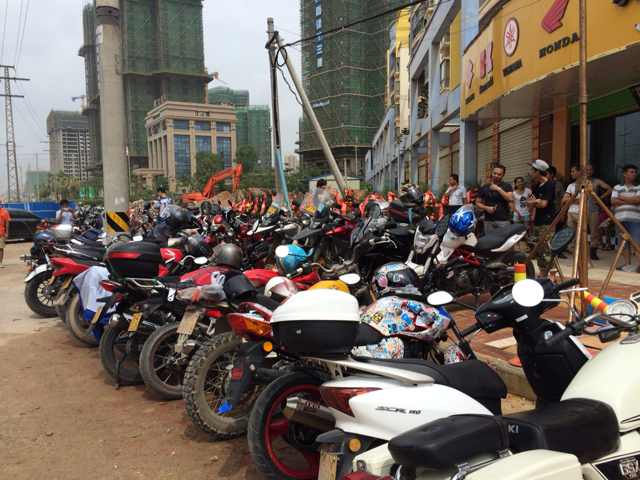
In 2001, the Vietnamese suddenly discovered that Chinese motorcycles sold for only about $200.
Faced with such a low price, consumers began to wonder if this was really a motorcycle.
At this point, the price can't be lowered any further.
They say that at $200,
The final net profit of the enterprise is only a few dozen yuan.
Prices have fallen, but sadly, companies have found themselves supporting each other rather than crushing their rivals.

As a result, new problems arise.
Due to the active compression of profit margins, let alone how much cost pressure, even production funds are beginning to be tight.
In the case of capital shortage, some companies have to cut the cost of motorcycle after-sales service.
However, the funding gap still cannot be filled, so the cost of manufacturing motorcycles has to be cut.
They started cutting corners and using cheap parts.
After these cost cuts, the new motorcycles still look like cars on the surface, but the quality is not guaranteed.

The time has come back to 2002, the critical moment when domestic motorcycles lost their prestige in Southeast Asia.
As the price war hurt profits and quality, the Japanese motorcycles that had been withdrawn from the market made a comeback.
And since Chinese companies have already lowered prices, Japanese brands can quickly win the trust of consumers as long as they guarantee quality and set prices a little lower.
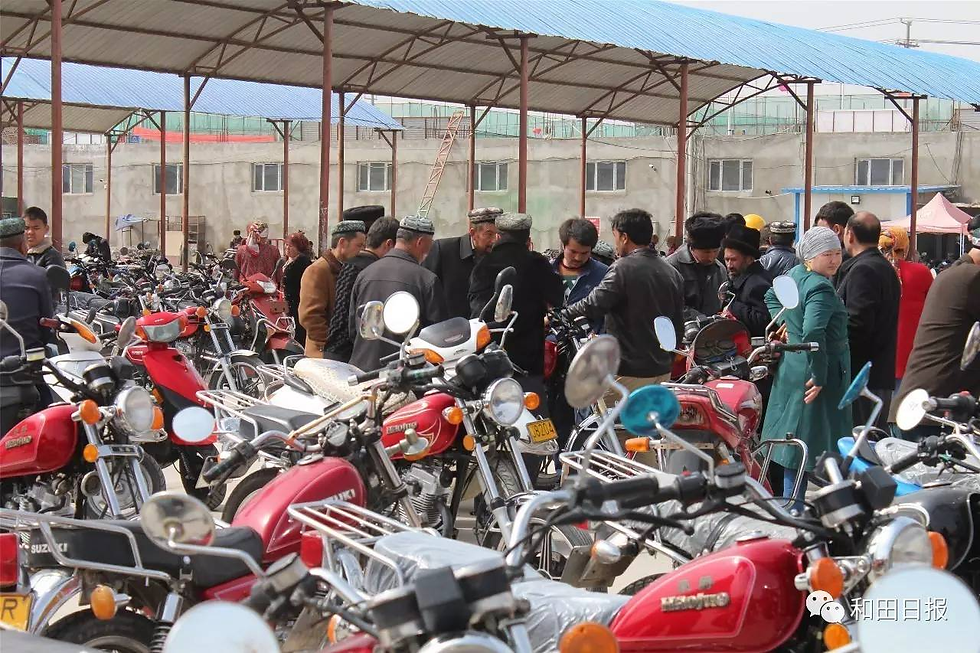
This proved to be the case, as Chinese motorcycle sales were sluggish, while Japanese motorcycles with reduced prices met the expectations of Southeast Asian consumers in terms of quality and price.
As a result, Japanese brands once again recaptured the market, and it only took a few years to recapture the lost market.
The same is true in Laos, where a large number of motorcycles are Honda or Yamaha.
Japanese brands have assembly plants in Thailand, and a large number of motorcycles are assembled and produced in Thailand before being re-exported to Laos.

Nowadays, Chinese motorcycles cannot compete not only with Japanese brands, but also with Korean motorcycles.
There are also many Daelim motorcycles made in Korea on the streets of Hanoi. In Southeast Asia, Chinese motorcycles have become synonymous with substandard and substandard brands.
As of 2016, Chinese motorcycles accounted for less than 5 percent of the Vietnamese market. More than 90% of the market share is still dominated by Japanese brands.

All in all, at present, in addition to struggling in the Southeast Asian market, domestic motorcycles have also tried to open the American market in recent years.
However, today's situation is different, motorcycles are no longer the mainstream means of transportation, cars and electric vehicles under the competition, motorcycles can only struggle to support.





Comments