
Another defection! North Korean diplomat has fled from Cuba to South Korea.

The story of Lee Il-gu's defection is akin to a global shockwave, not only drawing widespread attention on the international political stage but also revealing the confrontation between personal will and the state machinery under a totalitarian regime.
This diplomat, who once served as a counselor at North Korea's embassy in Cuba, chose to abandon the country he had served for years. Behind his defection was deep disappointment with the North Korean regime and a pursuit of personal ideals.

Lee Il-gu's story is not just the choice of a diplomat; it is a silent protest against the entire North Korean political system and has sparked contemplation on individual choices under totalitarianism:
Can personal courage shake the foundations of a rigid system in such a repressive environment?
Lee Il-gu was born into a political family and received a good education from a young age.
He studied in Cuba and Algeria before returning to North Korea to pursue further studies at Pyongyang University of Foreign Studies. These experiences gave him a significant advantage in North Korea’s diplomatic circles.
However, behind the “halo” seen by the outside world, Lee Il-gu’s life was full of distress and helplessness.
Despite being on the international stage, his monthly salary was only a few cents, and this financial struggle left him feeling oppressed and powerless.
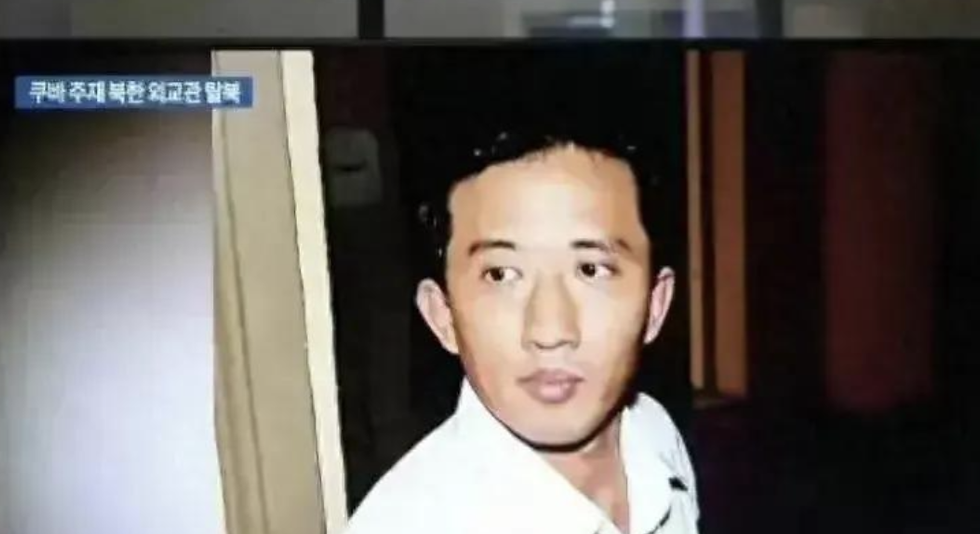
His long-term work in Cuba did not bring the pride he had expected. Instead, the hardships of life and the hopelessness within the regime gradually caused him to lose faith in the North Korean government, even leading him to entertain thoughts of rebellion.
His contact with South Korean intelligence was not accidental; in a closed totalitarian state, this was an extremely dangerous move.
However, it was precisely the high pressure of the North Korean regime and the hardships of life in Cuba that prompted Lee Il-gu to realize, when establishing contact with the South Koreans, that this might be a way to escape his predicament.
He was no longer just a passive victim of the regime but a warrior actively seeking change.
This raises the question: In a highly centralized regime, how great is the price an individual must pay to pursue freedom?

Lee Il-gu’s escape was filled with drama and danger. He had to constantly change hiding places, use forged identities and fake documents to avoid being hunted by both the North Korean and Cuban governments.
Every decision he made was on the edge of life and death; any minor mistake could lead to irreparable consequences.
As a former senior diplomat, he knew he was under close surveillance, yet he still resolutely planned and executed his escape.
This journey commands respect, as Lee Il-gu remained calm under extreme pressure, showing extraordinary courage and wisdom.
After successfully fleeing, Lee Il-gu arrived in South Korea. He did not choose a quiet, anonymous life but instead actively provided the South Korean government with a large amount of internal North Korean intelligence, covering politics, military, economics, and more.

Although he received protection from South Korea, he also became the top target on North Korea’s most-wanted list.
Lee Il-gu’s choice sparked heated debate. Some believed he betrayed his country for survival, while others saw his actions as a courageous resistance against a totalitarian regime.
Lee Il-gu’s defection was not just a turning point in his personal fate but also brought new variables to the situation on the Korean Peninsula.
Some believe this event could destabilize North Korea’s internal political situation and even lead to regime change.
Lee Il-gu’s story reflects not only the political ecology within North Korea but also the shift in mentality of people living in a closed society.
As more and more people begin to question the legitimacy of the regime, calls for social change will grow louder.

Lee Il-gu’s defection was not a rash decision but the result of long-term disappointment with the North Korean system.
He had once tried to open a North Korean restaurant in Cuba but was denied because he did not bribe his superiors.
This incident intensified his disgust with North Korea’s bureaucratic system, eventually leading him to completely abandon his loyalty to the state.
The “Cheongchuan River Incident” in 2013 was the final straw for him, making him realize that North Korea’s political system could no longer offer him any hope.
Lee Il-gu’s experience reminds us that individual choices can often play a huge role in the course of history.
Although he is just one person, the chain reaction triggered by his defection may have profound implications for both his country and the international situation.
Lee Il-gu’s story is not only a personal journey toward freedom but also a challenge to the entire North Korean political system.
Though his actions are controversial, the courage and pursuit of freedom he demonstrated deserve our reflection.
In the shadow of authoritarian politics, are we also invisibly bound by our environment, losing the courage to pursue our true selves?
Every choice we make can leave an indelible mark on the flow of history, and Lee Il-gu’s defection is undoubtedly one of those marks.


Comments